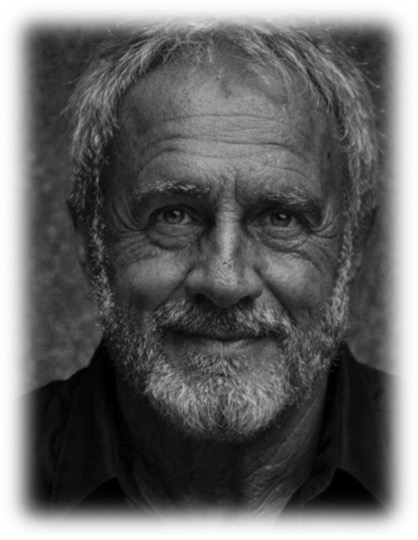
Biography
For over four decades, Graden Keller has worked with senior leaders, founders, and institutions navigating moments of complexity, structural change, and strategic consequence. He is the founder of kellerconsulting®️, a global enterprise consultancy built on a deliberately boutique, high-impact model.
His work focuses on the human dynamics that determine whether strategy holds or fails inside organizations. He emphasizes a central principle: organizational culture is not something leaders design directly—it emerges from the conditions they create and the behaviors they tolerate, including their own.
A second principle guides his advisory work. Leaders often already possess the answers they seek. The constraint is rarely intelligence or experience—it is noise. Competing incentives, institutional pressure, internal politics, and constant demand obscure judgment. His work reduces that noise so leaders can see clearly, think independently, and act from the full depth of their capability.
Before establishing his advisory practice, Graden Keller built a foundation in business and entrepreneurship. He holds a Bachelor of Business Administration (BBA) and a Master of Business Administration (MBA), and has owned and operated businesses across media, film, and fashion. That experience provided direct exposure to the realities of building organizations, managing creative and commercial tension, and carrying responsibility as an owner.
He founded kellerconsulting®️ in Texas in the late 1970s and developed the firm over time into a global enterprise consultancy serving organizations across energy, finance, manufacturing, technology, and research-driven sectors. The firm’s work has consistently centered on senior executives, boards, and founders operating at moments of transition, growth, and strategic inflection—where alignment, judgment, and clarity directly shape outcomes.
In 1996, Graden Keller established his advisory practice as a natural extension of his work, while continuing to lead kellerconsulting®️—integrating both practices where appropriate at the level of leadership and decision-making.
Across his advisory career, he has worked with organizations ranging from mid-sized privately held and family-owned businesses to Fortune 500 and Global 50 enterprises. This range provides a continuous view across the full spectrum of organizational life. His work with founder-led and family enterprises centers on governance, succession, and preserving entrepreneurial identity under scale. His work with large multinational organizations focuses on leadership alignment, institutional culture, and maintaining clarity under complexity.
Alongside his advisory work, he has engaged in higher education as an adjunct professor teaching economics, leadership, and management—and lecturing both in the United States and internationally. His academic work reflects the same themes present in his advisory practice—the relationship between leadership behavior, organizational conditions, and institutional outcomes.
His writing has become an extension of his advisory work. Through sustained publishing across digital platforms, his essays on leadership, culture, institutional responsibility, and civic life reach millions of professionals globally.
What distinguishes this body of work is not only its scale, but its pattern of consumption. His writing circulates within executive and leadership environments and is often read, carried, and applied without public signaling. Much of its reach occurs through direct sharing across professional networks, allowing ideas to travel beyond their original point of publication and enter ongoing conversations about leadership judgment, cultural integrity, and institutional responsibility.
In recent years, his writing has expanded beyond organizational contexts into broader questions of civic responsibility, democratic resilience, freedom of expression, and the cultural forces shaping modern institutions. These essays integrate strategic insight with philosophical reflection, drawing on decades of experience while engaging questions of truth, authority, and responsibility at scale.
Across advisory work, entrepreneurship, teaching, and writing, a consistent through-line remains: institutions hold when leaders create conditions where truth can surface, responsibility remains intact, and judgment is exercised with clarity. His work is centered on those conditions—how they are formed, how they break down, and how they can be restored in practice.
My Work →